


When established in 2020, the scheme was the first of its kind in the UK.
It was developed in response to increasing volumes of discarded crab lines and associated tackle left in our harbour during the crabbing season from March to October.
Crabbing remains a popular activity locally and with visitors. However, these predominantly plastic materials pose a serious risk to marine life through entanglement, ingestion and microplastic pollution. Lost lines can also damage coastal habitats and contribute to wider marine litter.
The scheme diverts crab lines from the marine environment by providing clearly marked collection points, promoting responsible crabbing practices and ensuring materials are carefully sorted and recycled by our volunteers.
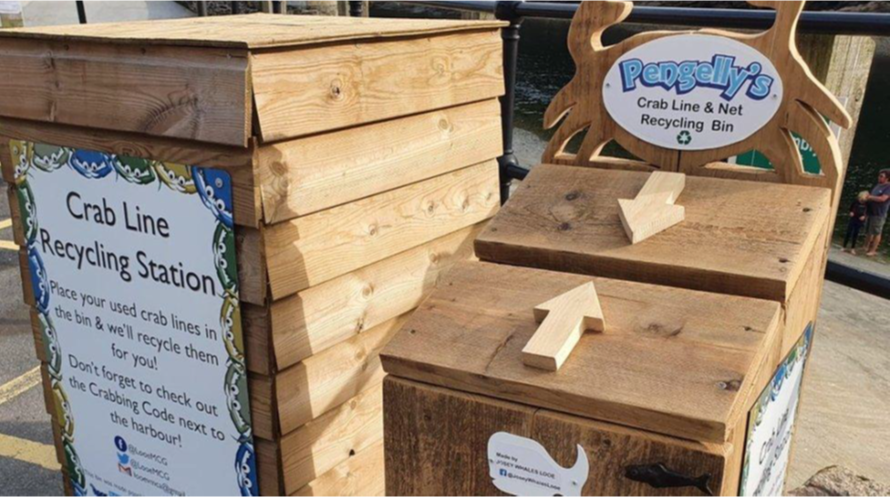
Crab line recycling in Looe
In a single season, volunteers have recycled approximately 5,000 plastic reels and around 100 kilometres of plastic line, contributing an estimated 900 hours of volunteer time.
Since launching, the initiative has shown that simple infrastructure combined with community education can significantly reduce litter linked to recreational crabbing.
We have also supported other harbour towns to replicate the model, sharing learning to extend impact beyond our shoreline.
A core strength of the scheme is our amazing volunteers and our partnership approach.
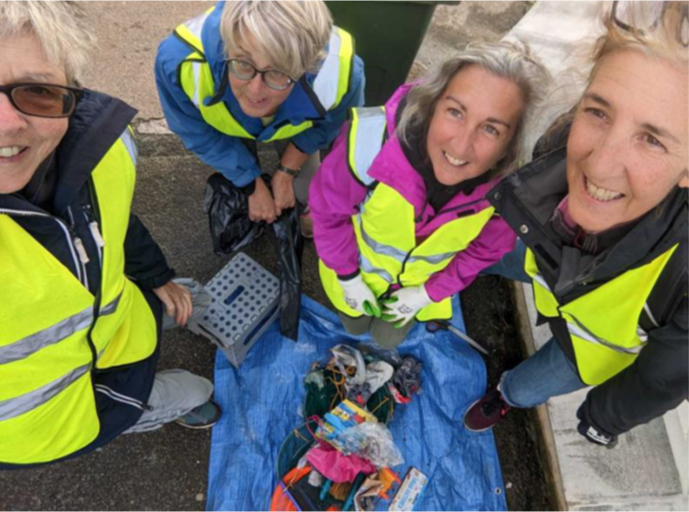
Looe Marine Conservation Group volunteers recycling crab lines
Throughout the season, volunteers empty the collection points and the materials are then carefully processed by hand.
Volunteers sift through each batch, separating crab lines from other waste, removing non-recyclable items, disentangling knots, and sorting materials by type. This detailed, manual process is labour intensive and mucky, but essential.
The process also provides a valuable opportunity for community engagement, as volunteers share their first-hand insight into the scale and impact of marine litter linked to recreational crabbing.
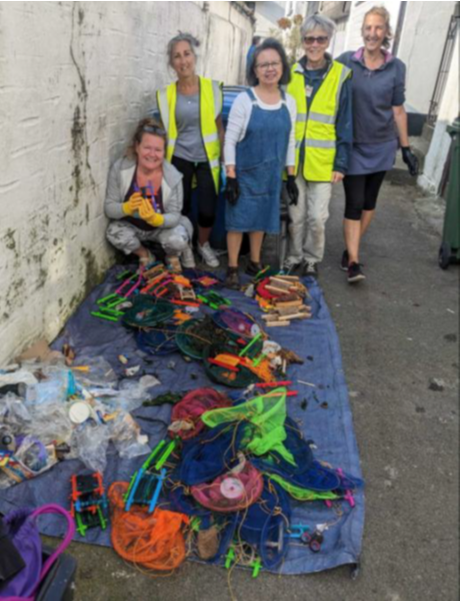
Volunteers with sorted recycling
At the end of the season, the fully sorted collection is transported to Fathoms Free where it becomes part of a wider network, tackling abandoned and discarded fishing gear. Unusable elements are responsibly disposed of, ensuring materials do not re-enter the marine environment.
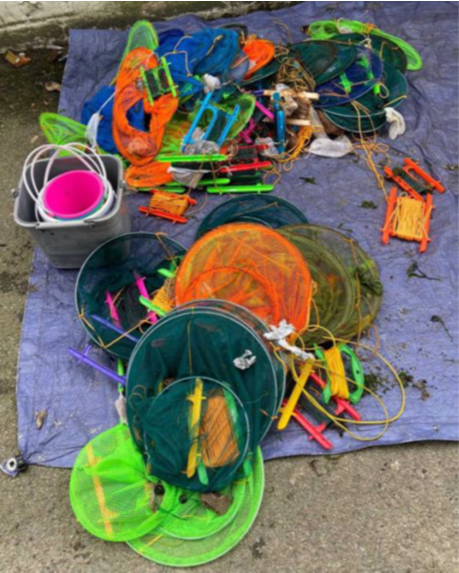
Sorted crab line recycling
All the usable pre-sorted materials are collected by Exeter’s Materials Reclamation Facility, as part of the Odyssey Innovation Marine Regeneration Scheme and are kept separate to enable the materials to be used specifically by manufacturers who wish to produce goods from marine-recovered plastics.
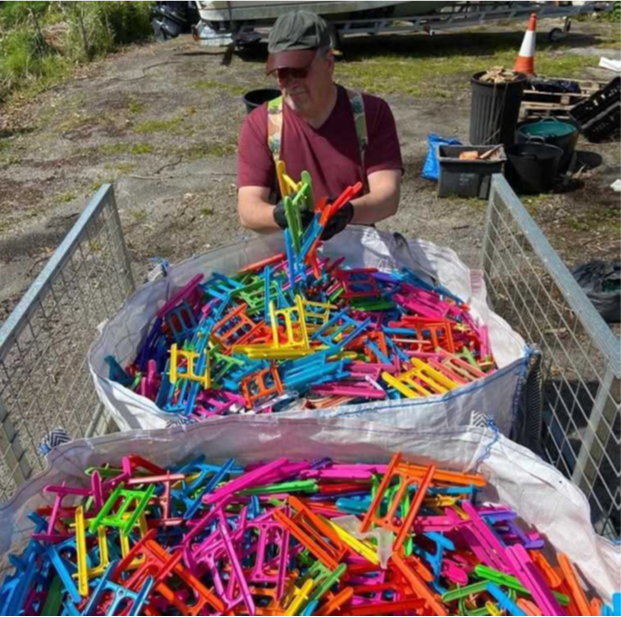
Plastic crab line reels
Plastics are processed and made into pellets, which can be purchased by anyone who wants to produce products using recycled plastic, thereby increasing their availability to manufacturers and reducing the production of virgin plastics that end up in circulation.
In addition, Odyssey Innovation produce products from the pellets themselves, such as kayaks and bodyboards, and sell them directly on their website.
This project prevents plastic pollution at source, supporting wildlife protection and contributing to sustainable coastal management. It combines practical action, volunteer engagement and behaviour change, while feeding into a wider circular economy network that transforms waste into usable products.
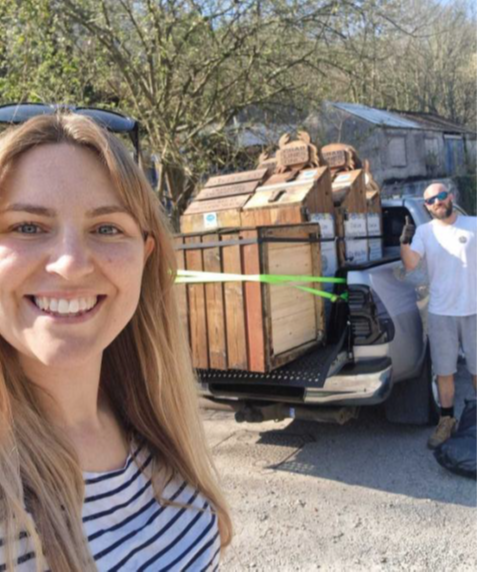
Crab line recycling boxes – ready for action!


